Online Quran learning is one of the most meaningful gifts you can offer your child, and today it no longer requires a nearby mosque or a long commute. A qualified teacher, a quiet corner at home, and a stable internet connection are enough to begin.
Yet many parents feel unsure about where to start. Is my child too young? Should we begin with the Arabic alphabet or jump to short surahs? How do I keep a five-year-old sitting still? These are the questions we hear every week from families around the world.
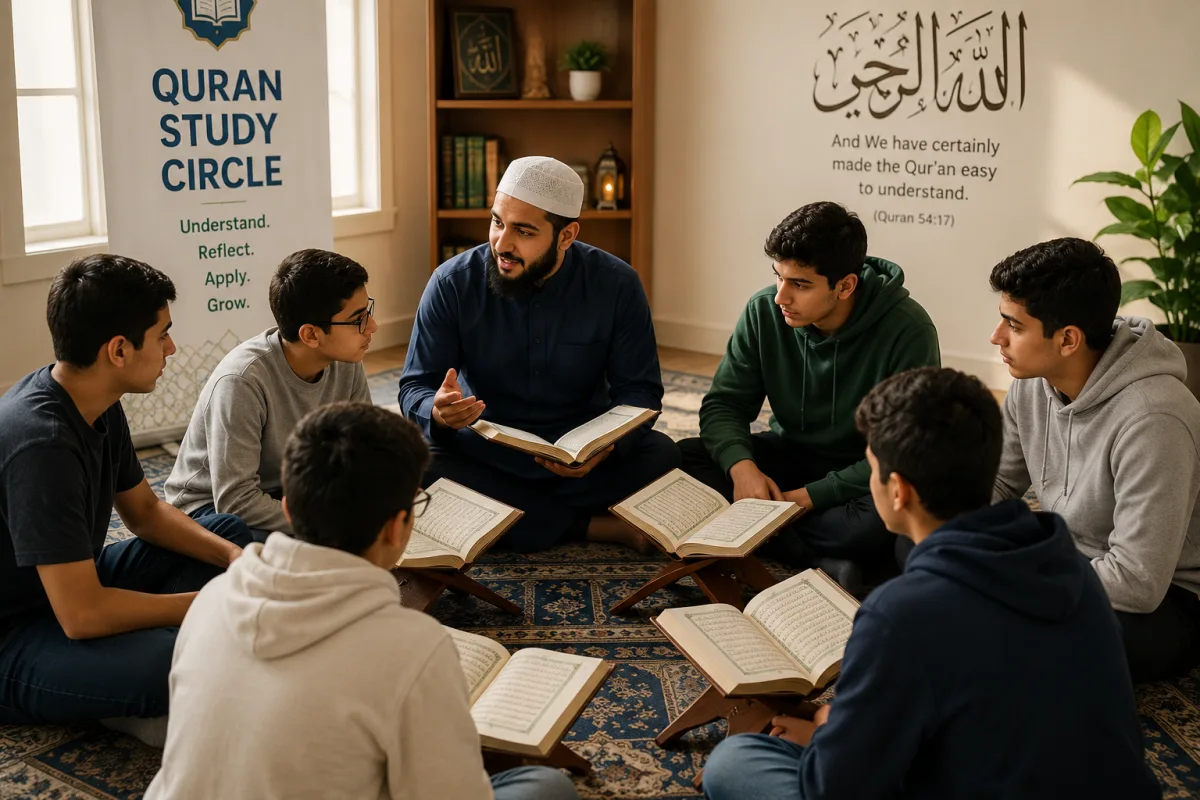
This guide walks you through everything you need to teach your child the Quran at home with confidence, from the right starting age to choosing a teacher, building a gentle routine, and recognising real progress. The reassurance at the heart of it comes from the Quran itself: "And We have certainly made the Qur'an easy to remember, so is there any who will be reminded?" (Surah al-Qamar, 54:17). Learning is meant to be within reach, for your child and for you.
Whether you are exploring online Quran classes for kids for the first time or trying to make your current lessons more effective, the practical steps below will help.
Reading time: about 11 minutes.
Reviewed by the Tayseerul Quran Teaching Team Qualified Quran teachers helping children and adults learn Quran reading, Tajweed, Noorani Qaida, Hifz, and Arabic through one-on-one online classes.
What You'll Learn
- When should a child start
- Start with the Noorani Qaida
- What to expect by stage
- Keeping children engaged
- What to look for in a teacher
- Building a simple home routine
- Is online really suitable for kids
- Signs your child is progressing
- Safety and comfort at home
- A teacher's perspective
When should a child start
There is no single perfect age, but most children are ready to begin gentle Quran learning between four and six years old. At this stage they can recognise shapes, repeat sounds, and enjoy short bursts of focused attention, which is exactly what early lessons ask of them.
Some signs your child may be ready:
- They can sit and listen to a short story for a few minutes.
- They enjoy repeating words and rhymes after you.
- They show curiosity about the Arabic letters they see in the Quran.
If your child is younger than four, you can still lay a beautiful foundation without formal lessons. Recite short surahs aloud, let them hear the Quran daily, and make the sound of Arabic a familiar, loving part of home life. Our guide on how a young child learns to read Quran explains how this early exposure shapes later reading.
Older children and even teenagers can start at any time. Beginning later is never a disadvantage; motivation and consistency matter far more than age.
Start with the Noorani Qaida
The Noorani Qaida is the traditional starting point for Quran reading, and for good reason. It introduces the Arabic letters, their sounds, and the way they join together, step by step, before a child ever attempts a full verse.
Think of it as the alphabet and phonics stage of Quran learning. A child works through:
- Individual letters and their correct pronunciation (makharij).
- Letter combinations and joined forms.
- Short vowels (harakat) such as fatha, kasra, and damma.
- Longer sounds, sukoon, and shaddah that shape real words.
Rushing past this stage is the most common mistake we see. A child who masters the Qaida reads the Quran smoothly for the rest of their life; a child who skips it often struggles with fluency for years.
For a fuller breakdown of how this works online, see our guide to Noorani Qaida online. Once the Qaida is solid, moving into Tajweed and reading from the Mushaf becomes far easier. Beginners can preview that stage in our Tajweed for beginners guide.
What to expect by stage
Progress feels less mysterious when you know roughly what each phase looks like. Every child is different, but this timeline reflects a typical one-to-one journey.
The first weeks. Your child settles in, meets their teacher, and begins recognising the first Arabic letters. The main goal here is comfort and routine, not speed. Celebrate that they showed up and tried.
Months 1 to 3. Letters become familiar, and short vowels are introduced. Your child starts blending sounds into small syllables. This is the phonics stage, and it can feel slow, but it is where the real foundation is poured.
Months 4 to 6. Reading begins to click. Many children can now sound out short words and start on brief surahs from Juz Amma. Confidence grows noticeably, and lessons feel more like reading than decoding.
Months 7 to 12. With steady practice, most children are reading connected words and short passages, applying basic Tajweed rules, and perhaps beginning light memorisation. By the end of the first year, the Quran feels like something they can actually read.
These timelines assume two to three lessons a week plus short daily practice at home. Fewer sessions still work; they simply stretch the timeline.
Keeping children engaged
A bored child does not learn well, and Quran lessons are no exception. Engagement is not about entertainment; it is about keeping sessions short, warm, and achievable.
Practical ways to hold a child's attention:
- Keep lessons short. Fifteen to thirty minutes is plenty for young children. Two short sessions beat one long, tearful one.
- Praise effort, not just results. "You tried that hard letter three times" builds far more than "you're so clever."
- Use repetition playfully. Turn letter review into a game, a race, or a call-and-response.
- End on a high. Finish while your child still feels successful, not exhausted.
- Let them see progress. A simple sticker chart or a "surahs I can read" list makes growth visible.
A good online teacher builds much of this into the lesson naturally. Your job at home is to keep the surrounding mood positive and pressure-free.
What to look for in a teacher
The teacher makes or breaks the experience. A skilled, patient Quran teacher for kids turns a nervous beginner into a confident reader; the wrong fit can put a child off for years.
Look for a teacher who:
- Is qualified in Tajweed and has genuine experience teaching children, not just adults.
- Speaks your child's language well enough to explain and encourage.
- Is patient, gentle, and consistent, never harsh about mistakes.
- Offers one-to-one attention so lessons move at your child's pace.
- Gives you honest, regular feedback on progress.
Many families specifically prefer a female Quran tutor online, especially for young children or daughters, and a good school will accommodate that comfortably. Whatever you choose, ask for a trial lesson first. Watching one session tells you more than any description. You can learn more about how structured programmes work in our overview of online Quran classes.
Building a simple home routine
Consistency beats intensity. Ten focused minutes every day will take your child further than a two-hour session once a week. The Quran points to this measured, unhurried approach: "...and recite the Qur'an with measured recitation." (Surah al-Muzzammil, 73:4).
A simple, sustainable routine might look like this:
- Anchor it to an existing habit. Straight after Maghrib, or right before bedtime story time, so it becomes automatic.
- Keep it tiny. Review yesterday's letters or lines for five to ten minutes. That is enough.
- Same time, same place. Predictability helps young children settle quickly.
- Recite together. Even if you are learning too, hearing you try removes any fear of getting it wrong.
For a ready-made structure you can adapt, see our daily Quran routine for kids. The best routine is the one your family will actually keep, so start smaller than you think you need to.
Is online really suitable for kids
Many parents worry that young children cannot learn well over a screen. In practice, one-to-one online lessons often work better than crowded in-person classes, for several reasons.
- Full attention. In a class of twenty, a child may recite once. In a one-to-one lesson, they read the whole time.
- The comfort of home. Children relax faster in familiar surroundings, and shy learners open up more quickly.
- A parent nearby. You can watch, reassure, and reinforce what was taught, without leaving the house.
- Flexible scheduling. Lessons fit around school, naps, and family life, wherever you live.
Online is not automatically better; a distracted setup with a weak teacher fails anywhere. But with a good tutor and a calm corner, screen-based Quran learning is genuinely effective for children.
Signs your child is progressing
Progress in Quran learning is not always loud, and it rarely moves in a straight line. Knowing what to watch for helps you stay encouraged during the quieter stretches.
Real signs of progress include:
- Smoother recognition. Letters that took effort last month now come quickly.
- Fewer prompts. Your child self-corrects or reads a line without waiting for help.
- Growing confidence. They volunteer to read, rather than hiding from it.
- Retention. A surah learned weeks ago still comes back easily.
- Curiosity. They ask what a word means or point out letters outside of lessons.
If you hit a plateau, do not panic. Plateaus are normal, especially during the phonics stage. Talk to the teacher, keep the routine steady, and trust the process. Consistency almost always breaks through.
Safety and comfort at home
Because online lessons happen in your home, a little setup goes a long way toward keeping your child safe, focused, and comfortable.
- Learn in a shared space. Keep lessons in a family area, such as the living room, rather than behind a closed door.
- Stay within earshot. A parent nearby reassures the child and keeps the environment safe.
- Use a reputable school. Choose a provider with vetted teachers, clear policies, and a proper booking system.
- Set up the tech calmly. A charged device, steady internet, and headphones reduce mid-lesson frustration.
- Protect the mood. Remove distractions like toys and other screens so the short session stays focused.
These small habits let your child relax into learning while you keep a comfortable, watchful presence in the background.
A teacher's perspective
After years of teaching children online, the pattern our teachers see most clearly is this: the children who flourish are rarely the "gifted" ones. They are the ones whose parents kept lessons calm, short, and consistent, and who made the Quran a warm part of home rather than a test to pass.
We also see how much the teacher's tone matters. A child who is corrected gently tries again; a child who is scolded shrinks. Patience is not a soft skill in Quran teaching; it is the whole method. The Prophet ﷺ said, "The best of you are those who learn the Qur'an and teach it." (Sahih al-Bukhari 5027), and that honour carries a responsibility to teach with mercy.
If we could give parents one piece of advice, it would be this: measure success over months, not days. Show up, keep it kind, and let the small daily steps accumulate. In our experience, that is what produces confident, lifelong readers of the Book of Allah.
Frequently Asked Questions
At what age can my child start online Quran classes?
Most children are ready between four and six, but there is no strict rule. Readiness to sit, listen, and repeat matters more than exact age, and older children can start successfully at any time.
Do we have to begin with the Noorani Qaida?
For most beginners, yes. The Qaida builds correct letter sounds and reading foundations that make everything afterward far smoother, though a teacher will confirm the right starting point for your child.
How many lessons per week does my child need?
Two to three short lessons a week, plus a few minutes of daily practice at home, works well for most children. Consistency matters more than long, infrequent sessions.
Can girls learn from a female Quran teacher?
Yes. Many families prefer a female Quran tutor online, and a good school will arrange this comfortably, especially for young children and daughters.
Is one-to-one online really better than group classes?
For most children, yes. One-to-one lessons give full attention and let the pace match your child exactly, which is hard to achieve in a busy group class.
What if my child loses interest or hits a plateau?
This is completely normal, particularly during the early phonics stage. Keep the routine gentle and steady, talk to the teacher, and progress almost always returns.
How long until my child can read the Quran?
With steady lessons and short daily practice, many children read connected words and short surahs within six to twelve months. Every child differs, so treat this as a guide rather than a deadline.
Continue Learning
If you found this guide helpful, you may also enjoy:
- How a young child learns to read Quran
- Noorani Qaida online
- Daily Quran routine for kids
- Online Quran classes for kids
- Kids Quran learning FAQ
Final Thoughts
Teaching your child the Quran at home is not about being a perfect scholar or having endless time. It is about starting gently, choosing a caring teacher, and showing up a little each day. The Quran was made easy to learn, and with a warm routine and the right support, your child can grow into a confident, joyful reader.
Take the first small step today, and let the rest build from there.
Book a free trial lesson for your child today →
References
- Surah al-Qamar (54:17): "And We have certainly made the Qur'an easy to remember, so is there any who will be reminded?"
- Surah al-Muzzammil (73:4): "...and recite the Qur'an with measured recitation."
- Sahih al-Bukhari 5027: The Prophet ﷺ said, "The best of you are those who learn the Qur'an and teach it."