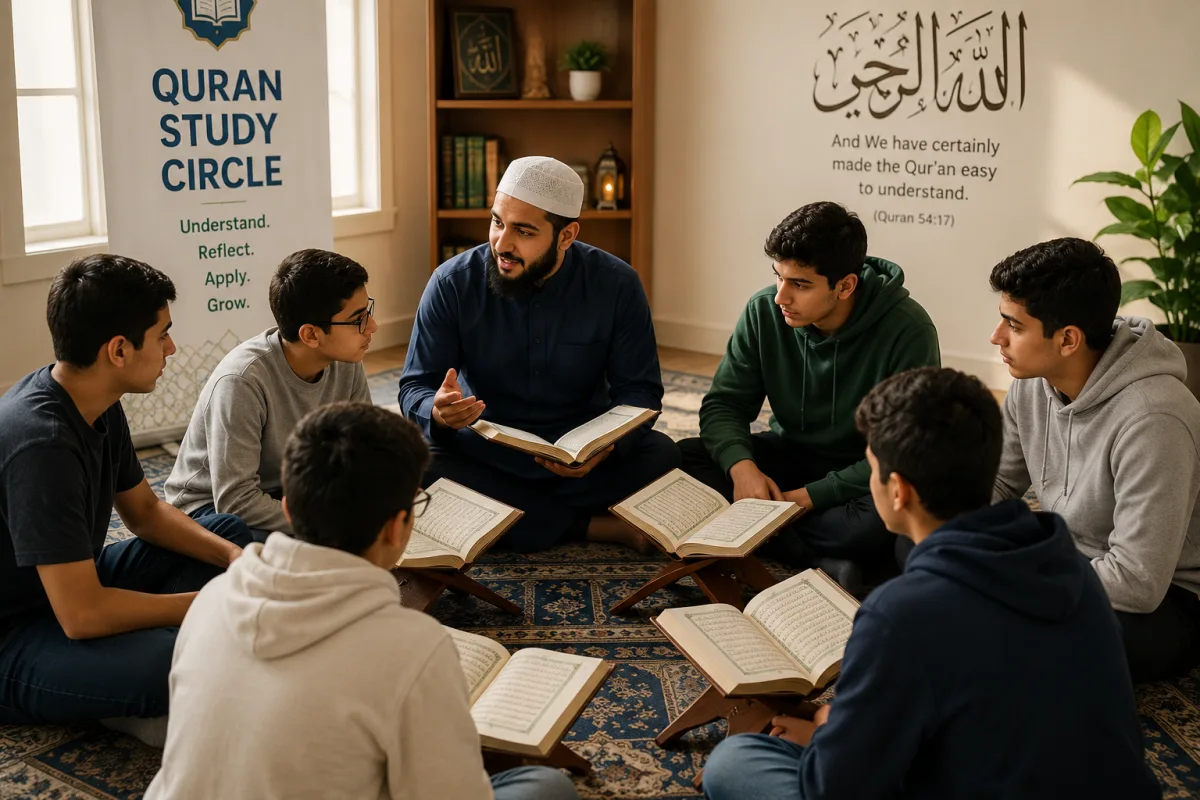
If you are a parent thinking about teaching your child the Qur'an, you almost certainly have questions. When is the right age to begin? Where do we even start? How many lessons a week is enough, and will my child actually sit still long enough to learn? These are the everyday worries of caring parents, and they deserve honest, practical answers rather than pressure or guilt.
The good news is that Qur'an learning for children is more accessible today than at any point in history. A qualified teacher can now sit with your child one-to-one from your own living room, guiding them letter by letter, sound by sound. And the foundation for all of it is a promise from Allah Himself. As He says in Surah al-Qamar (54:17): "And We have certainly made the Qur'an easy to remember, so is there any who will be reminded?"
That verse is worth holding onto whenever the journey feels slow. The Qur'an was made easy. Your job as a parent is not to be a scholar or a perfect teacher yourself, but to open the door, keep it open, and let a patient teacher do the rest. This guide gathers the questions parents ask us most often and answers them clearly, so you can start with confidence.
Reading time: about 9 minutes.
Reviewed by the Tayseerul Quran Teaching Team Qualified Quran teachers helping children and adults learn Quran reading, Tajweed, Noorani Qaida, Hifz, and Arabic through one-on-one online classes.
What You'll Learn
- Getting Started With Quran for Kids
- Choosing Where to Begin
- Lessons and Practice
- Learning Quran Online
- Sitting With Your Child and Building Habits
- Keeping Kids Motivated
- Screen Time and Balance
- How Long Until My Child Can Read
- A Teacher's Perspective
Getting Started With Quran for Kids
What is the best age to start teaching my child the Qur'an?
There is no single "correct" age, but many families find that somewhere between four and seven years old is a comfortable window to begin. At that stage children are absorbing language quickly, they enjoy repetition, and short, playful sessions feel natural to them. Their ears are sharp and they can often imitate Arabic sounds more easily than adults.
That said, please do not worry if your child is older. Children of eight, ten, or twelve begin all the time and progress beautifully, sometimes faster because they can concentrate for longer. The "best age" is really the age your child is right now. What matters far more than the starting number is consistency once you begin.
If your child is very young, keep first lessons tiny: five or ten minutes of listening, repeating a few letters, and lots of encouragement. You can read more about how the earliest stages unfold in how a young child learns to read the Qur'an.
Do I need to know Arabic myself before my child can start?
No. This is one of the most common worries, and it is completely unfounded. A qualified teacher carries the Arabic knowledge so you do not have to. Thousands of parents who cannot read a single Arabic letter have watched their children go on to recite fluently.
Your role is different and just as valuable: you provide encouragement, a quiet space, and gentle consistency. You do not need to correct pronunciation or explain rules of Tajweed. Leave the technical teaching to the teacher and focus on being your child's biggest supporter.
Choosing Where to Begin
Where should a complete beginner actually start?
For most children, the natural starting point is the Noorani Qaida. Think of it as the alphabet primer of Qur'an reading: a carefully sequenced book that introduces the Arabic letters, their shapes, their sounds, and then how those letters join together to form words. It builds the foundation that everything else rests on.
Rushing a child straight into the Qur'an without this groundwork usually causes problems later, as gaps in pronunciation become habits that are hard to unlearn. The Qaida stage prevents that. Once a child works through it patiently, reading the Qur'an itself becomes far smoother. You can learn more about this stage in our guide to Noorani Qaida online.
Should my child learn to read before memorising?
In most cases, yes, reading comes first. When a child can read the Arabic script confidently, memorisation (Hifz) becomes accurate and self-sustaining, because they can check themselves against the page. Some very young children do memorise short surahs by ear first, which is lovely, but proper reading remains the goal that unlocks independence.
A good teacher will assess your individual child and recommend the right balance. There is no need to force a single fixed path.
Lessons and Practice
How many lessons a week does my child need?
For steady progress, most children do well with two or three lessons a week. This rhythm is frequent enough that the child does not forget what they learned between sessions, but light enough that it never feels overwhelming alongside school and family life.
One lesson a week can still work, especially for a busy family or a very young child, though progress will naturally be slower. If your child is enthusiastic and you want faster momentum, four or five short sessions can be wonderful. The best schedule is the one you can genuinely keep every single week, because consistency beats intensity every time.
How long should each lesson be?
Lesson length should match your child's attention span, not an adult's idea of a proper study session. As a rough guide:
- Ages 4 to 6: around 15 to 20 minutes
- Ages 7 to 10: around 25 to 30 minutes
- Ages 11 and up: 30 to 45 minutes
Short and focused always beats long and exhausted. A child who finishes a lesson still feeling good will come back willingly tomorrow. A child pushed past their limit starts to dread it. Between lessons, even five minutes of daily review at home does more good than a single long weekend session. Our guide to a daily Qur'an routine for kids offers simple ways to make that stick.
How much practice at home is realistic?
Aim for little and often. Five to ten minutes on the days your child does not have a lesson is plenty to keep the material fresh. Tie it to something that already happens daily, such as after breakfast or before bed, so it becomes a habit rather than a negotiation. The measured, unhurried spirit the Qur'an itself encourages fits children perfectly: "...and recite the Qur'an with measured recitation" (Surah al-Muzzammil, 73:4).
Learning Quran Online
Is online learning really suitable for young children?
Yes, and often it works better than parents expect. One-to-one online lessons give a child the full attention of a dedicated teacher, with no classroom of thirty pupils to compete with. The teacher can share a digital Qaida or Qur'an on screen, point to each letter, and hear every sound your child makes.
Children today are also very comfortable with video calls. What makes online work is not the technology but the format: individual attention, a consistent teacher who knows your child, and a parent nearby for the youngest learners. Our overview of online Qur'an classes for kids explains how a typical lesson is structured.
Can girls learn with a female teacher?
Yes. Many families prefer a female teacher for their daughters, and this is easily arranged with online classes. A patient, qualified female teacher can build a warm and comfortable rapport, which many girls respond to especially well. If this matters to your family, simply request it when you enrol. You can read more in our guide to finding a female Qur'an tutor online.
What do we need to get started technically?
Very little. A tablet, laptop, or even a large phone, a stable internet connection, and a quiet corner are enough. Headphones can help your child focus and hear the teacher's pronunciation clearly. There is no special software to master, and the teacher will guide you through joining the first lesson.
Sitting With Your Child and Building Habits
Should I sit with my child during lessons?
For younger children, yes, at least in the beginning. Your presence reassures them, helps them stay settled, and shows them that this matters to you. You do not need to participate in the teaching; just being nearby is enough. Over time, as your child grows in confidence, you can gradually step back and let them own the lesson.
For older children, many parents find their child prefers a little independence and focuses better when a parent is not hovering. Read your own child. The goal is security first, then independence, at whatever pace suits them.
How do we build a habit that lasts?
Habits are built through anchoring and repetition. Choose fixed lesson days and protect them. Pair home practice with an existing daily moment. Keep a simple visual chart or sticker sheet for younger children so they can see their own progress. Celebrate small milestones warmly. When Qur'an becomes a normal, expected, pleasant part of the week rather than an occasional special event, it quietly becomes part of who your child is.
Keeping Kids Motivated
How do I keep my child engaged and enjoying it?
Motivation grows from success and warmth, not pressure. A few things that consistently help:
- Praise effort, not just results. Notice when they try hard, even on a difficult day.
- Keep sessions short enough to end on a high. Stop while they still have energy.
- Connect it to meaning. Tell them the story of a surah, or why a particular verse is beautiful.
- Let the teacher relationship grow. Children work hard for a teacher they like and trust.
- Mark milestones. Finishing the Qaida, learning a new surah, or reading a full page all deserve a small celebration.
What if my child resists or refuses?
First, take a breath, this is completely normal and almost every family goes through it. Resistance is usually a signal, not defiance. The lesson may be too long, the timing may clash with tiredness or hunger, or the child may simply be having an off week.
Try shortening sessions, moving them to a fresher time of day, and removing any sense of punishment from the whole activity. Speak to the teacher, who has seen this many times and can adjust their approach. Above all, avoid turning the Qur'an into a battleground. Keep your own tone calm and loving. A short pause followed by a gentle restart is far better than forcing a tearful child to continue. Patience now protects your child's lifelong relationship with the Qur'an.
Screen Time and Balance
I worry about screen time. Is online Qur'an learning healthy?
It is a fair concern, and a reasonable one to raise. The helpful distinction is between passive screen time and purposeful screen time. Scrolling videos alone is very different from a live, interactive lesson with a caring teacher who is speaking directly to your child and responding to them in real time.
You can also keep the balance healthy in practical ways: use lessons of an appropriate length, sit your child at a table rather than slouched with a device, use headphones for focus, and follow the lesson with an offline activity such as reciting from a physical Qur'an or reviewing on paper. Used this way, the screen is simply a window to a real teacher, not a substitute for one.
How Long Until My Child Can Read
Realistically, how long before my child can read the Qur'an?
Every child is different, so treat any timeline as a gentle guide rather than a promise. With consistent lessons two or three times a week plus a little home practice, many children work through the Noorani Qaida within roughly six months to a year, and then begin reading from the Qur'an itself.
Fluency, reading smoothly with correct Tajweed, continues to develop over the following years, and honestly it keeps improving for a lifetime. What matters is direction, not speed. A child moving steadily forward, enjoying the journey, and building good habits will arrive. Comparison with other children rarely helps; your child's own steady progress is the only measure worth watching.
A Teacher's Perspective
After years of teaching children online, our teachers will tell you that the families who succeed are rarely the ones chasing the fastest results. They are the ones who show up consistently, keep the atmosphere loving, and trust the process. The child who does ten quiet minutes most days will, within a year, be far ahead of the child who does an intense hour once in a while and then loses momentum.
A qualified teacher does more than point at letters. They diagnose exactly where a child is stuck, correct pronunciation before bad habits set in, adjust pace to a child's mood and energy, and build the kind of relationship that makes a child want to try. This is why one-to-one teaching is so effective for children, and it reflects a value placed high in our tradition. The Prophet ﷺ said, "The best of you are those who learn the Qur'an and teach it" (Sahih al-Bukhari 5027).
Our advice to parents is simple. Start where your child is with the Noorani Qaida online, keep lessons short and warm, build a light daily Qur'an routine for kids, and lean on your teacher whenever you hit a bump. Understanding how a young child learns to read the Qur'an will also help you set realistic expectations, and our general guide to online Qur'an classes for kids shows what a well-run lesson looks like in practice.
On matters of religious ruling, such as questions about specific obligations, please ask a qualified scholar. Our role is to teach reading and recitation well; a scholar is the right person for fiqh.
Frequently Asked Questions
At what age can my child start learning the Qur'an?
Many families begin between four and seven, but older children start successfully all the time. The best age is the age your child is now, as long as you can be consistent.
What should a beginner learn first?
Most beginners start with the Noorani Qaida, which teaches the Arabic letters, their sounds, and how to join them, building a solid foundation before reading the Qur'an itself.
How many lessons per week are recommended?
Two or three lessons a week suits most children. One a week still works but progresses more slowly. Choose a schedule you can genuinely keep every week.
How long should each lesson be?
Match the lesson to your child's attention span: roughly 15 to 20 minutes for very young children, 25 to 30 minutes for primary ages, and up to 45 minutes for older children.
Is online Qur'an learning effective for children?
Yes. One-to-one online lessons give a child the full attention of a dedicated teacher, and most children are comfortable with video calls, making the format both personal and effective.
Can my daughter learn with a female teacher?
Yes. Female teachers are readily available for online classes. Simply request this when you enrol if it is your family's preference.
How long until my child can read the Qur'an?
With consistent lessons and light home practice, many children finish the Qaida within six months to a year, then begin reading the Qur'an, with fluency developing over the following years.
Continue Learning
If you found this guide helpful, you may also enjoy:
- Online Qur'an classes for kids
- How a young child learns to read the Qur'an
- Noorani Qaida online
- A daily Qur'an routine for kids
- Finding a female Qur'an tutor online
Final Thoughts
Teaching your child the Qur'an is one of the most beautiful gifts you can give, and it does not require you to have all the answers or to be a teacher yourself. It asks for something simpler and steadier: an open door, a patient rhythm, and a warm home where the Qur'an is welcome. Start small, stay consistent, keep it loving, and lean on a qualified teacher to carry the technical work.
Remember the promise you began with. The Qur'an was made easy to remember. Your child does not need to rush; they need to begin, and then to keep going. Every letter learned is a step, and steps add up faster than parents ever expect.
Book a free trial lesson for your child today →
References
- Surah al-Qamar (54:17): "And We have certainly made the Qur'an easy to remember, so is there any who will be reminded?"
- Surah al-Muzzammil (73:4): "...and recite the Qur'an with measured recitation."
- Sahih al-Bukhari 5027: "The best of you are those who learn the Qur'an and teach it."