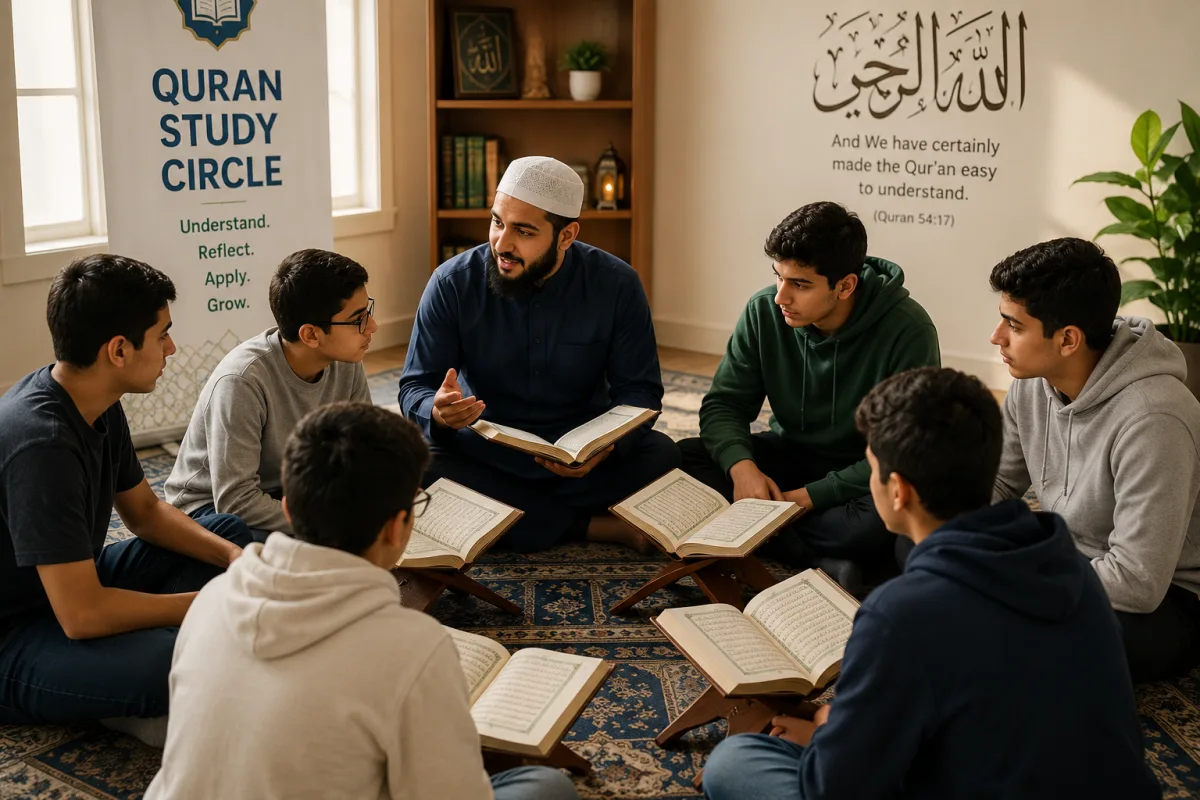
Every parent who begins this journey asks the same question: how long before my child can actually read the Qur'an — and what will it look like along the way? It is a fair question, and an important one, because knowing what to expect is what keeps you patient on the slow days and encouraged on the good ones.
The honest answer is that every child is different. But there is a well-worn path that most young learners follow, and once you can see the milestones, the whole journey feels far less mysterious. This guide walks you through a typical child's first year with the Qur'an, month by month — from the very first Arabic letter to reading words and short surahs — along with the challenges you are likely to meet and how to handle them.
The Prophet ﷺ said: "The best of you are those who learn the Qur'an and teach it." (Sahih al-Bukhari 5027). Giving your child this gift is one of the most rewarding things you will ever do — so let's look at how it actually unfolds.
Reading time: about 11 minutes.
Reviewed by the Tayseerul Quran Teaching Team Qualified Quran teachers helping children and adults learn Quran reading, Tajweed, Noorani Qaida, Hifz, and Arabic through one-on-one online classes. Our teachers have guided hundreds of children through the Noorani Qaida into confident Qur'an reading, so the stages below reflect patterns we see again and again in real lessons.
What You'll Learn
- Why every child learns at a different pace
- The first weeks: settling in
- Months 1–3: learning the Arabic letters
- Months 4–6: vowels and joining letters
- Months 7–12: reading words and short surahs
- Signs your child is making good progress
- Common challenges and how to handle them
- Practical tips for parents
- Why the Noorani Qaida matters
- The role of a qualified teacher
- Frequently asked questions
Why Every Child Learns at a Different Pace
Before we look at the timeline, hold this lightly: it is a guide, not a race. A four-year-old and a seven-year-old will move very differently, and even two children of the same age can be months apart. Attention span, exposure to Arabic sounds at home, personality, and simple consistency all shape the pace.
This is nothing to worry about. Allah reassures us: "And We have certainly made the Qur'an easy to remember, so is there any who will be reminded?" (Surah al-Qamar 54:17). The Qur'an is made accessible — your job as a parent is not to rush your child through it, but to keep the path steady and joyful. A child who learns slowly but loves the Qur'an has succeeded far more than one who races ahead and comes to dread the lesson.
Throughout this guide, the milestones assume short, regular practice — ideally two to four online Quran lessons for children each week, with a little practice in between. Adjust the timeline up or down for your own child without concern.
The First Weeks: Settling In
The opening weeks are less about learning and more about settling in. Your child is getting used to the teacher, the routine, and the simple act of sitting for a short lesson. A shy child may barely speak at first — this is completely normal, and it passes faster than you expect.
During this stage, keep three things in mind:
- Keep sessions short. Fifteen to twenty minutes is plenty for a young child.
- Sit nearby. Your presence helps a small child feel secure while they build trust with the teacher.
- Celebrate tiny wins. Recognising one letter or repeating a sound correctly deserves genuine praise.
By the end of the first few weeks, most children are comfortable, looking forward to the lesson, and ready to begin the real work: the letters.
Months 1–3: Learning the Arabic Letters
Now the Noorani Qaida begins in earnest. Your child learns the twenty-eight Arabic letters — their shapes and, most importantly, their correct sounds — a few at a time, with plenty of repetition.
To an adult this feels slow, but for a child it is careful, essential foundation-building. Getting the letters and their articulation points right now prevents reading errors that would be very hard to undo later.
What progress looks like in this stage:
- Recognising letters by sight, even when they look similar.
- Producing sounds that were difficult at first — the throat letters and the emphatic letters especially.
- Beginning to tell apart letters that share a shape but differ by dots.
By around the third month, a consistent child can usually name and sound out most of the alphabet. Interactive tools — tapping a letter to hear it, tracing its shape — make this stage far more engaging and are one of the real advantages of well-designed online Quran classes for kids.
Months 4–6: Vowels and Joining Letters
This is the stage where many parents notice real momentum. The letters take on the short vowels — fatḥa, kasra and ḍamma — and begin to join together into small words.
Suddenly your child is not just recognising letters in isolation; they are starting to read. Confidence grows visibly here, and many children begin to enjoy showing off what they can do — a wonderful sign that the love for the Qur'an is taking root.
Milestones in this stage:
- Reading letters with all three short vowels correctly.
- Blending letters into two- and three-letter combinations.
- Handling sukoon and shaddah, which change how letters are read.
- Recognising the long vowels (madd) and holding them.
Your child's teacher will correct them often at this point. That is exactly right — and, importantly, your child will start to hear their own mistakes too, which is a clear sign that real learning is happening.
Months 7–12: Reading Words and Short Surahs
With the Qaida foundation in place, your child moves into reading full words, short verses, and often begins memorizing tiny surahs from Juz Amma. Recitation at this stage is slow and careful — and that is precisely how it should be. Speed comes much later; accuracy comes first.
By the end of the first year, a consistent young learner can typically:
- Read simple Arabic words and short sentences.
- Apply basic pronunciation rules without prompting.
- Recite a few short surahs from memory.
- Open the Qur'an and attempt a line with growing confidence.
This is also the natural point to begin gentle Tajweed for beginners, refining pronunciation as reading becomes more fluent.
Signs Your Child Is Making Good Progress
Parents often worry whether their child is learning quickly enough. More often than not, the child is doing better than the parent realises. Here are the encouraging signs to look for:
- They look forward to lessons rather than resisting them.
- They recognise more Arabic letters each week, even if slowly.
- They read with increasing confidence, hesitating less over familiar letters.
- They memorize short surahs naturally, often just from listening.
- They correct their own mistakes after a teacher's feedback.
- They enjoy practising at home, sometimes without being asked.
If you notice even a few of these, your child is on a healthy path — trust it, and keep the routine steady.
Common Challenges and How to Handle Them
Every journey has bumps. Here are the ones parents meet most, and what to do:
- Loss of interest. Almost every child hits a flat patch. Keep lessons short and pressure-free, protect a consistent time, and let it pass — do not turn it into a battle.
- Confusing similar letters. This is normal and resolves with repetition. Trust the teacher's drilling; it works.
- Reluctance to practise between lessons. Tie practice to an existing daily habit (after school, before a favourite activity) and keep it tiny — five minutes counts.
- Comparing to other children. Resist it. Your child's pace is their own, and comparison steals the joy that keeps them going.
The single most important rule: never let the Qur'an become associated with stress. A calm, encouraging tone will carry your child further than any amount of pushing.
Practical Tips for Parents
- Protect a fixed daily time. Ten focused minutes every day beats an hour once a week. Consistency is everything.
- Practise out loud. Reading the Qur'an is an oral skill; silent practice does not build it.
- Praise effort, not just results. "You worked hard on that letter" builds a learner; "you're so clever" does not.
- Use a reward chart. A visible streak of stars gives young children something to be proud of.
- Let your child "teach" you. Asking them to show you a letter cements their learning and boosts their confidence.
- Build a simple routine. Our guide to a daily Quran routine for kids gives you a ready-made plan.
Why the Noorani Qaida Matters
It is tempting to want a child to jump straight into the Qur'an. Resist it. The Noorani Qaida exists precisely because it builds reading the right way: letters, then vowels, then joining, then rules — each step secure before the next.
Skipping this foundation almost always produces persistent reading errors that surface later and take far longer to fix. The Qaida is the difference between a child who reads the Qur'an correctly for life and one who struggles with habits that should never have formed. It is time invested, not time lost.
The Role of a Qualified Teacher
A child can learn a great deal from a parent, but reading the Qur'an correctly is graded by the ear — and the mistakes a child makes are exactly the ones they cannot hear in themselves. This is why the Qur'an has always been taught one-to-one, with a teacher who listens, corrects gently, and keeps the child moving forward.
A good teacher does three things a video or app cannot: they hear each sound and correct it before it sets, they adapt the pace to your individual child, and they keep lessons warm and encouraging so your child stays motivated. That combination — patient expertise plus consistency — is what turns a hesitant beginner into a confident young reader. It is the heart of what a quality online Quran class for kids provides.
Frequently Asked Questions
What is the best age for a child to start learning the Qur'an?
Most children are ready between four and six, once they can sit for a short activity and repeat sounds. Before that, simply reading to them and letting them hear the Qur'an builds familiarity and love that pays off later.
How long does the Noorani Qaida take to complete?
It varies with age and consistency. A motivated child practising several times a week often works through it over several months to a year. The goal is a solid, correct foundation — not speed.
Can a four-year-old really learn the Qur'an online?
Yes. With one-to-one attention, short sessions, and engaging interactive materials, many young children focus better at home than in a busy group class — especially with a parent nearby in the early weeks.
Should my child memorize surahs before learning to read?
The two go together beautifully. Young children naturally memorize short surahs by listening, while learning to read through the Qaida. Neither has to wait for the other.
How many lessons per week are recommended?
Two to four short lessons a week is a good starting point, with brief daily practice in between. Consistency matters far more than long, infrequent sessions.
What if my child resists or loses interest?
It is common and usually temporary. Keep sessions short and positive, hold a steady routine, and let the teacher lead with patience. Forcing it backfires; gentle consistency wins.
Do I need to know Arabic to help my child?
Not at all. Your role is encouragement and routine, not instruction — the teacher handles the teaching. Many parents happily learn alongside their children.
Continue Learning
If you found this guide helpful, you may also enjoy:
- Online Quran Classes for Kids
- Noorani Qaida Online
- Tajweed for Beginners
- Daily Quran Routine for Kids
- Teaching Kids the Quran: A Parent's FAQ
Final Thoughts
A child's first year with the Qur'an is a series of small, steady steps: settling in, learning the letters, adding vowels, joining them into words, and finally reading short surahs. It rarely happens quickly, and it is never a race — but with a patient teacher and a parent who protects a gentle daily routine, it happens, insha'Allah.
If you would like your child to begin this journey with a qualified, caring teacher who starts exactly where your child is, we would love to help.
Book a free trial lesson for your child today →
References
- Sahih al-Bukhari 5027
- Surah Al-Qamar (54:17)