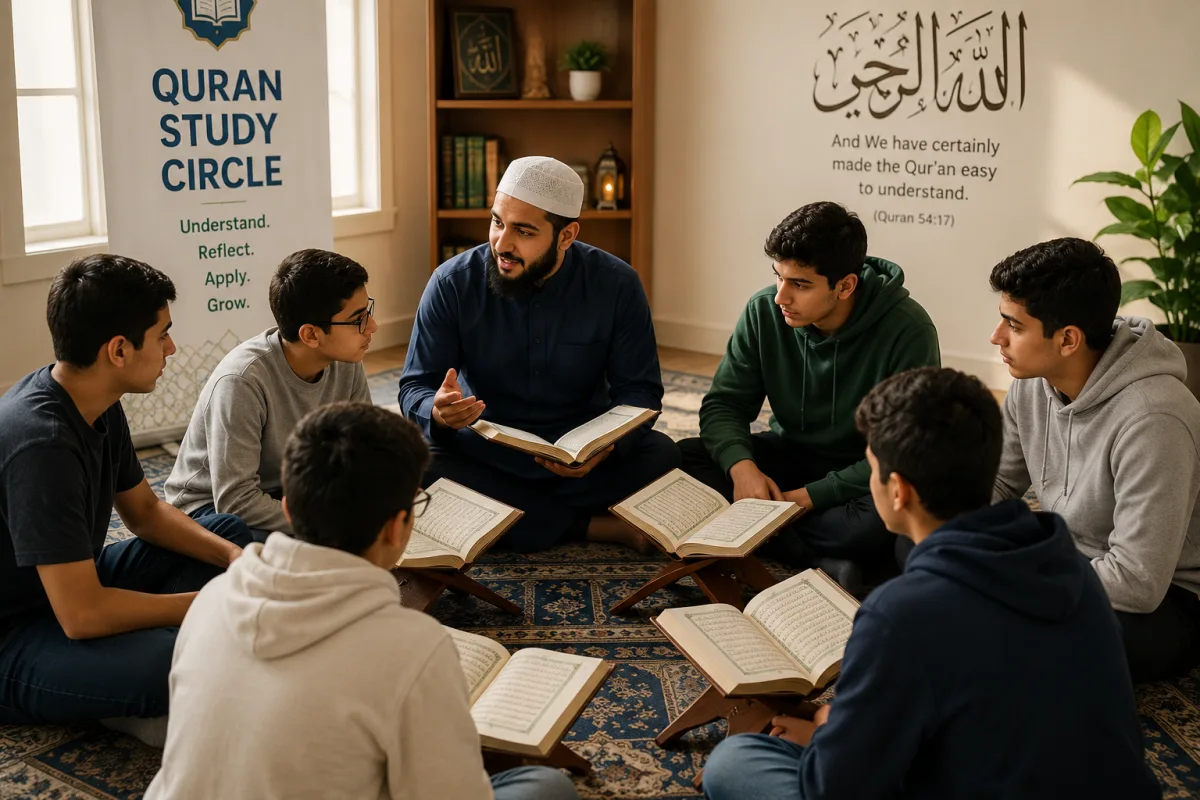
Choosing who teaches your family the Qur'an is one of the most personal decisions a Muslim household makes. For many sisters and parents, that decision comes with a clear preference: a female teacher. It might be for a shy daughter who freezes in front of strangers, a teenage girl stepping into her practice, or an adult sister who simply feels more at ease learning from another woman. Whatever the reason, the wish is valid and widely shared.
The good news is that finding a qualified female online Quran tutor has never been easier. One-to-one online classes have opened doors that were once closed by distance, gender preference, or a lack of local teachers. A sister in a small town with no nearby Islamic school can now learn from a certified teacher across the world, from her own living room.
Allah reminds us that this Book was made approachable: "And We have certainly made the Qur'an easy to remember, so is there any who will be reminded?" (Surah al-Qamar, 54:17). A patient, understanding teacher makes that ease real.
This guide walks you through why sisters and parents choose female teachers, what qualifications truly matter, and how to arrange the right fit with confidence.
Reading time: about 11 minutes.
Reviewed by the Tayseerul Quran Teaching Team Qualified Quran teachers helping children and adults learn Quran reading, Tajweed, Noorani Qaida, Hifz, and Arabic through one-on-one online classes.
What You'll Learn
- Why Choose a Female Quran Tutor
- What Qualifications to Look For
- How Online Makes It Private and Accessible
- For Daughters and Teenage Girls
- What Sisters Can Learn
- Comfort, Consistency, and Trust
- A Teacher's Perspective on Sister-to-Sister Learning
- How to Arrange the Right Teacher
- What You Need to Start
Why Choose a Female Quran Tutor
For many sisters, comfort is the foundation of learning. When you feel relaxed, you ask more questions, you repeat a difficult letter without embarrassment, and you show up week after week. A female teacher often removes a layer of hesitation that some sisters feel, allowing them to focus fully on the Qur'an itself.
For parents, a female tutor can be the natural choice for a daughter. Girls frequently open up more readily with a woman who understands their world, their pace, and the little worries that come with reading aloud for the first time. That rapport turns a lesson from a chore into something a child looks forward to.
There is also the matter of household preference and comfort with observing modesty. Learning at home, with a teacher of the same gender, lets families maintain the environment they are most comfortable with while still accessing excellent instruction. None of this is about limiting options; it is about creating the conditions where a learner can truly flourish.
Finally, representation matters. A young girl who sees an accomplished female scholar reciting beautifully learns something beyond Tajweed: she learns that this path is open to her too, and that women have always carried and taught the Qur'an with excellence.
What Qualifications to Look For
A warm personality matters, but it must sit on a foundation of real competence. When you evaluate a female Quran teacher, look first at her command of Tajweed. She should be able to explain the rules clearly, correct your pronunciation gently, and model each sound accurately.
Ask about her training. Some teachers hold an Ijazah, a formal certification connecting them through a chain of teachers back to the Prophet ﷺ. An Ijazah is a strong sign of accuracy, especially for Hifz and advanced recitation, though many excellent teachers of beginners are highly effective without one. What matters is that her knowledge is sound and verifiable.
Experience with your specific goal is just as important. A teacher wonderful at guiding adult beginners through the alphabet may differ from one who specializes in memorization. Ask how long she has taught, what ages she works with, and whether she has helped students with needs like yours before.
Finally, look for teaching skill, not just knowledge. Can she break a hard concept into simple steps? Is she patient? A short trial lesson tells you more than any list of credentials. Reputable programs like online Quran classes let you experience the teaching before committing.
How Online Makes It Private and Accessible
Online learning solves several problems at once for sisters seeking a female tutor. There is no travel to an unfamiliar place, no mixed classroom, and no scheduling around a distant commute. The lesson comes to you, in a space you already trust.
Privacy is a genuine benefit. Many platforms allow audio-focused sessions or camera settings that let a sister learn comfortably. You control the environment, from the room you sit in to who is present. For many women, this removes the single biggest barrier that once kept them from formal study.
Accessibility is the other gift. A sister who is a full-time mother can schedule lessons during a nap. A working professional can learn late in the evening. A student in a country with few Islamic schools can access a teacher who would otherwise be unreachable. These private Quran classes for sisters fit around real life rather than demanding life bend around them.
The technology required is modest, which we cover below. The point is simple: distance and circumstance no longer decide who gets to learn.
For Daughters and Teenage Girls
Parents often ask when and how to start their daughters. The answer depends on the child, but a female teacher is frequently the smoothest entry point for girls, particularly as they approach the pre-teen and teenage years when many prefer a woman's guidance.
For younger girls, the focus is warmth and play. A good teacher uses repetition, encouragement, and small wins to build confidence with letters and sounds. If you are just beginning with a young child, our guide on how a young child learns to read Quran offers a gentle roadmap, and structured online Quran classes for kids keep lessons age-appropriate.
Teenage girls bring different needs. They juggle school, friendships, and growing independence. A relatable female teacher who respects their maturity while keeping standards high can keep a teenager engaged during years when many drift away from practice. She becomes not just an instructor but a quiet role model.
Consistency here pays off for a lifetime. A girl who builds a steady relationship with the Qur'an in childhood carries that connection into adulthood, and often passes it on to her own children one day.
What Sisters Can Learn
The curriculum for sisters is as rich as for anyone. It typically begins with the Noorani Qaida online, the foundational primer that teaches Arabic letters, their sounds, and how they join together. This is the essential first step for adult beginners and children alike.
From there, most students move into Tajweed for beginners, the science of reciting the Qur'an correctly. Allah instructs us: "...and recite the Qur'an with measured recitation." (Surah al-Muzzammil, 73:4). Tajweed is how we honour that command, giving each letter its due.
Many sisters then choose to memorize, whether a few short surahs for prayer or the entire Qur'an. Guided memorize Quran online programs pace the work realistically and add regular revision so what is learned stays firm.
Alongside recitation, some sisters study Arabic to understand the meanings of what they read, deepening their connection with every verse. A skilled teacher can weave in the meanings of common words so that recitation becomes reflection, not repetition alone. Whatever the goal, a good teacher builds a path from where you are to where you want to be.
Comfort, Consistency, and Trust
Progress in the Qur'an is built on steady, unhurried effort. Two things sustain it: comfort and consistency. When a sister feels safe with her teacher, she keeps her appointments, does her practice, and pushes through the plateaus every learner hits.
One-to-one lessons help enormously. The teacher adjusts to your exact level, spends extra time on the sounds you find hard, and never lets you feel lost in a crowd. That personal attention is why many families prefer private sessions over group classes, especially in the early stages.
Trust grows over time with the same teacher. She remembers your goals, notices your improvement, and celebrates your milestones. This continuity is precious, so when you find a teacher who fits, protecting that relationship is worth the effort. If you need to change teachers for any reason, a good program makes the transition smooth so your momentum is not lost.
A Teacher's Perspective on Sister-to-Sister Learning
From years of teaching, our team has seen a pattern repeat itself. Sisters who begin nervously, apologising for their pronunciation, often become the most dedicated students once they feel genuinely at ease. The teacher's first job is not correction; it is creating safety.
We remind our students of the honour in this work. The Prophet ﷺ said, "The best of you are those who learn the Qur'an and teach it." (Sahih al-Bukhari 5027). A female teacher who helps a sister read her first full surah, or a mother guide her daughter, is living that Hadith directly.
Experience also teaches patience with the adult learner. Grown women sometimes feel embarrassed to begin at the alphabet. A seasoned teacher normalises this, reminding them that many companions and scholars learned as adults, and that Allah rewards the one who struggles with recitation. We meet each sister where she is, without judgement.
The most important lesson we have learned is this: the right teacher changes everything. Knowledge matters, but the human bond, the encouragement, the gentle insistence on small daily steps, is what carries a student from her first shaky letters to fluent, beautiful recitation.
How to Arrange the Right Teacher
Start by naming your goal clearly. Are you a complete beginner? Do you want Tajweed refinement, memorization, or help for a daughter? A clear goal helps a program match you with the right specialist rather than a generalist.
Next, request a trial lesson. This is the single most useful step. In one session you will sense whether the teacher is patient, clear, and someone you can learn from comfortably. Notice how she corrects mistakes and whether you feel encouraged or rushed.
Discuss practical details up front: scheduling across time zones, lesson length, frequency, and what happens if you miss a class. Ask how progress is tracked and how often you will receive feedback. A well-run program handles female Quran tutor online placement thoughtfully, considering both teaching style and personality fit.
Finally, give the arrangement a few weeks before judging it. First lessons are about building rapport. Real momentum usually appears once the teacher understands your pace and you have settled into a rhythm. If it truly is not working, ask for a different teacher; a good program wants you to succeed, not simply to stay.
What You Need to Start
The practical requirements are refreshingly simple. You need a reliable internet connection, a device with a microphone such as a phone, tablet, or laptop, and a quiet corner where you can focus for the length of a lesson.
A physical or digital copy of the Qur'an or Qaida helps, though many teachers share their screen so you can follow along. Headphones improve audio clarity and add privacy, which some sisters appreciate. That is genuinely all the hardware most students need.
Beyond equipment, bring a small notebook for the sounds and rules you want to revise, and set aside a few minutes daily for practice between lessons. Short, regular practice beats long, occasional sessions every time.
Most of all, bring sincerity and patience. Reading began with a single command, "Read in the name of your Lord who created." (Surah al-Alaq, 96:1), and every sister's journey begins with one lesson, one letter, one small act of trust. The rest follows, step by patient step.
Frequently Asked Questions
Are female Quran tutors as qualified as male teachers?
Yes. Qualification depends on training, Tajweed mastery, and teaching experience, not gender. Many female teachers hold Ijazah certifications and years of experience teaching children and adults.
Can my teenage daughter have the same female teacher long-term?
Usually yes. Good programs aim for continuity so your daughter builds trust and steady progress with one teacher, changing only if scheduling or fit requires it.
Do I need to show my face on camera during lessons?
Not necessarily. Many sisters use audio-focused lessons or adjust camera settings for privacy. Discuss your preference with the program beforehand so the teacher can accommodate it.
Can a complete adult beginner start from zero?
Absolutely. Many adult sisters begin with the Arabic alphabet through the Noorani Qaida and progress at their own pace. A patient teacher makes starting as an adult comfortable, not embarrassing.
How long does it take to learn to read the Qur'an?
It varies by starting point and practice. Many beginners read simple verses within a few months of consistent one-to-one lessons, with Tajweed refinement continuing afterward.
Is one-to-one better than group classes for sisters?
For most learners, yes, especially at the start. One-to-one lessons give personal attention, faster correction, and a pace matched exactly to your level and schedule.
What if I don't connect with the first teacher?
That is normal and fixable. Reputable programs offer trial lessons and will happily match you with a different female teacher until you find the right fit.
Continue Learning
If you found this guide helpful, you may also enjoy:
- Online Quran Classes: A Complete Guide
- Noorani Qaida Online: Your First Step
- Tajweed for Beginners
- Online Quran Classes for Kids
- How to Memorize the Quran Online
Final Thoughts
Finding the right female teacher is worth every bit of care you put into it. The comfort of learning from another woman, the privacy of your own home, and the steady encouragement of a patient teacher combine to make the Qur'an feel truly within reach, exactly as Allah described it. Whether for yourself, your daughter, or both, the path is open and the first step is simple.
Begin when you are ready, and let the journey unfold one lesson at a time.
Request a free trial with a qualified female Quran teacher →
References
- Surah al-Qamar (54:17): "And We have certainly made the Qur'an easy to remember, so is there any who will be reminded?"
- Surah al-Muzzammil (73:4): "...and recite the Qur'an with measured recitation."
- Surah al-Alaq (96:1): "Read in the name of your Lord who created."
- Sahih al-Bukhari 5027: The Prophet ﷺ said, "The best of you are those who learn the Qur'an and teach it."