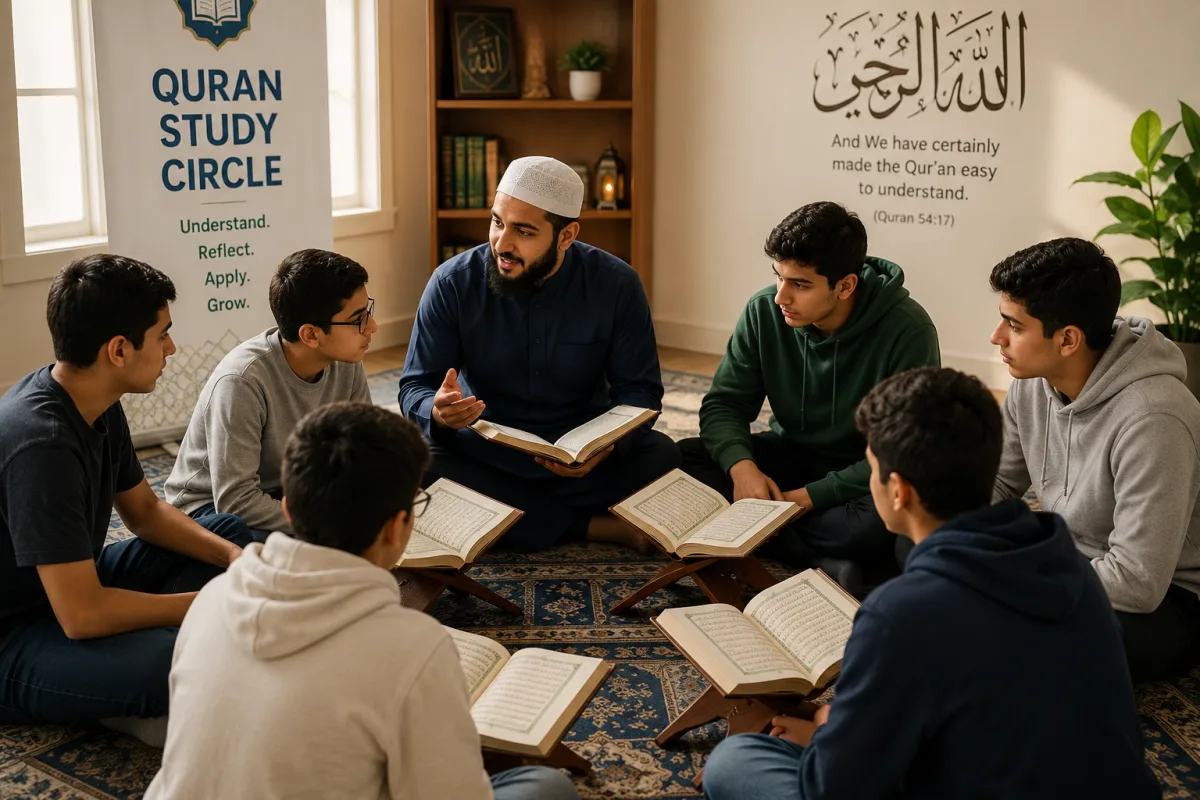
Choosing a Qur'an teacher is one of the most important decisions a family makes on the path of learning the Book of Allah. Whether you are a parent searching for your child's first Noorani Qaida class or an adult hoping to polish your Tajweed, the question surfaces quickly: should you look for a certified teacher who holds an Ijazah or an Al-Azhar qualification, or is an experienced teacher without formal certification just as good?
It is a fair question, and it deserves a fair answer. The honest truth is that this is not a simple contest of "certified good, uncertified bad." Many uncertified teachers are gifted, patient, and deeply knowledgeable, while a certificate on its own does not guarantee a warm or effective classroom. What matters is understanding what each kind of qualification actually promises, and matching that to where you or your child stand on the journey.
The Prophet, peace and blessings be upon him, said, "The best among you are those who learn the Qur'an and teach it" (Sahih al-Bukhari 5027). That noble station belongs to sincere teachers of every background. Our aim in this article is not to rank people, but to help you make a wise, informed choice.
Reading time: about 11 minutes.
Reviewed by the Tayseerul Quran Teaching Team Qualified Quran teachers helping children and adults learn Quran reading, Tajweed, Noorani Qaida, Hifz, and Arabic through one-on-one online classes.
What You'll Learn
- What Certification Actually Means
- What an Ijazah Guarantees
- What Experienced Uncertified Teachers Bring
- Certification vs Teaching Skill
- Which Matters More for Beginners
- Which Matters More for Advanced Learners and Hifz
- The Ijazah Seeker's Priority
- Cost and Value Considerations
- How to Verify and Decide
- A Balanced Verdict
- Frequently Asked Questions
- Continue Learning
- Final Thoughts
- References
What Certification Actually Means
In the world of Qur'an teaching, "certified" usually points to one of a few things. The most respected is the Ijazah — a formal license granting permission to recite and to teach, traditionally awarded after a student recites the entire Qur'an to a teacher with correct Tajweed, often from memory. An Ijazah carries a sanad, an unbroken chain of transmission that connects the reciter, teacher by teacher, back to the Prophet, peace and blessings be upon him.
Other forms of certification include degrees or diplomas from established institutions such as Al-Azhar University in Egypt, or graduation from recognised Qur'an academies and Tajweed programmes. These credentials confirm that a teacher completed a structured course of study and was assessed by qualified examiners.
What certification does, at its heart, is verify. It tells you that a knowledgeable authority has listened to this person recite, checked their accuracy against established rules, and vouched for them. In a field where mistakes in pronunciation can subtly change meaning, that verification carries real weight. Certification is a signal of reliability, not a personality test — and understanding that distinction is the key to using it wisely.
What an Ijazah Guarantees
An Ijazah is the gold standard of recitation credentials, but it is worth being precise about what it promises. First, it confirms that the holder has recited the Qur'an accurately, in a particular riwayah (narration, most commonly Hafs 'an 'Asim), with the Tajweed rules applied correctly and consistently. This is not a light achievement; it typically takes years of disciplined practice.
Second, an Ijazah confirms a connection to the living chain of transmission. The command in Surah al-Muzzammil (73:4), "...and recite the Qur'an with measured recitation," has been passed down through generations of reciters, each verified by the one before. An Ijazah is your assurance that this teacher stands within that chain and is authorised to place students within it too.
What an Ijazah does not automatically guarantee is teaching ability, patience with young children, comfort with technology, or skill in explaining a tricky rule to a nervous beginner. A teacher can have a flawless recitation and still find it hard to keep a seven-year-old engaged for thirty minutes online. This is not a criticism of the Ijazah — it simply confirms a different thing. Knowing this helps you set the right expectations and ask the right follow-up questions. You can read more about the process in our Ijazah Quran teacher FAQ.
What Experienced Uncertified Teachers Bring
It would be a mistake to assume that a teacher without a formal certificate is somehow lesser. Across the Muslim world, countless devoted teachers have spent decades guiding students, many of them trained through years of apprenticeship, family scholarship, or study that was never formalised into a paper certificate.
Experienced uncertified teachers often bring qualities that are hard to examine and impossible to fake: intuition for where a student is struggling, warmth that puts an anxious child at ease, creativity in explaining the same rule five different ways until it clicks, and the steady patience that keeps a learner coming back week after week. These are the things that turn a lesson into genuine progress.
Many such teachers also have a strong command of correct Tajweed, learned directly from qualified elders, even if they never pursued an Ijazah for themselves. For a great many learners — especially beginners — a caring, skilled, knowledgeable teacher of this kind is exactly what is needed. The absence of a certificate is not the same as the absence of competence. The task for a family is simply to verify that competence in other ways, which we cover further below.
Certification vs Teaching Skill
Here is the crucial insight that resolves most of the confusion: certification and teaching skill measure two different things.
Certification measures what the teacher knows and can do themselves — the accuracy of their own recitation, the depth of their study, the verification of an external authority. Teaching skill measures how well the teacher can transfer that knowledge to someone else — their patience, clarity, encouragement, and ability to diagnose and correct mistakes gently.
The ideal teacher has both. But when families rank one above the other without thinking, they often make errors in both directions. Some chase the most decorated Ijazah holder and end up with a technically brilliant reciter who cannot hold their child's attention. Others pick the friendliest available person and never confirm whether the Tajweed being taught is actually correct — which risks embedding mistakes that are hard to unlearn later.
The wise approach is to treat certification and teaching skill as two separate boxes to tick, and to weigh each according to your stage of learning. For some learners the teaching-skill box is the priority; for others the certification box is non-negotiable. The next sections walk through exactly when each one leads.
Which Matters More for Beginners
For a complete beginner — a child starting Noorani Qaida or an adult learning to read Arabic letters for the first time — teaching skill and correct foundational Tajweed usually matter most.
At this stage, the student is not attempting advanced recitation or seeking a chain of transmission. They need someone who can make the letters memorable, correct the makharij (points of articulation) kindly, keep motivation high, and build a habit of daily practice. A patient, encouraging teacher with a solid grasp of the basics will serve a beginner beautifully, whether or not they hold a formal Ijazah.
Allah says in Surah al-Qamar (54:17), "And We have certainly made the Qur'an easy for remembrance, so is there any who will remember?" The Qur'an is made accessible, and a good beginner teacher's whole art is to keep it feeling that way — never overwhelming, always within reach.
That said, "teaching skill matters most" does not mean "accuracy does not matter." The foundations a beginner learns will shape everything that follows, so the teacher must still pronounce and teach the letters correctly. The point is one of emphasis: at the start, warmth and clear teaching carry the day, provided the basics are sound. Structured beginner-friendly programmes like our online Quran classes are designed around exactly this balance.
Which Matters More for Advanced Learners and Hifz
As a student advances — refining Tajweed to a high level, beginning Hifz (memorisation), or preparing for fluent, beautiful recitation — the balance shifts. Now the teacher's own mastery becomes decisive.
In Hifz, a small error repeated during memorisation becomes stubbornly lodged and difficult to remove. A teacher whose own recitation is precisely correct, and who can hear the faintest slip in a harakah or a madd, protects the student from carrying mistakes forward. This is where certification starts to earn its keep: it is evidence that the teacher's ear and tongue have themselves been rigorously verified.
Advanced learners also benefit from a teacher who can explain the finer points of Tajweed with confidence, discuss differences between narrations, and hold the student to a demanding standard without discouraging them. Teaching skill still matters enormously here — a harsh expert can crush a memoriser's morale — but it must now sit alongside genuine mastery. For serious Hifz and advanced Tajweed, the ideal is clear: seek a teacher who is both highly skilled at teaching and verifiably accurate, ideally certified.
The Ijazah Seeker's Priority
There is one situation where certification is not merely preferable but essential: when the student's goal is to earn an Ijazah of their own.
An Ijazah can only be granted by a teacher who themselves holds a valid Ijazah with a connected chain of transmission. This is the nature of the sanad — you cannot receive authorisation from someone who was never authorised. So if your aim is to complete the Qur'an with a licensed reciter and be granted your own certified chain, a certified teacher is non-negotiable, no matter how gifted an uncertified teacher may be at teaching.
For these students, the practical questions become specific: In which narration is the teacher licensed? Is their chain documented and verifiable? Do they regularly grant Ijazahs, and under what conditions? Many families seeking this path look toward institutionally trained instructors, such as Al-Azhar online Quran teachers, precisely because their credentials are traceable to a recognised authority. If an Ijazah is your destination, let certification lead your search from day one.
Cost and Value Considerations
Certification often correlates with cost. A highly credentialed Ijazah holder or Al-Azhar graduate may charge more than an uncertified teacher, reflecting years of study and the value of a verified chain. That premium can be entirely justified — for the right student.
But higher cost is only worthwhile if it buys something you actually need. Paying advanced-Ijazah rates for a five-year-old's first Noorani Qaida lessons may not be the wisest use of a family budget, when a skilled, affordable teacher would serve that child just as well. Conversely, economising on a cheaper teacher for serious Hifz or Ijazah preparation can cost far more in the long run if accuracy suffers.
Think of it as matching the tool to the task. Value is not the lowest price, nor the most impressive certificate — it is the best fit between what you are paying for and what your stage of learning genuinely requires. A good school will help you find a qualified teacher at a level that suits both your goals and your means, rather than pushing everyone toward the most expensive option.
How to Verify and Decide
Whichever way you lean, verification protects you. A certificate can be checked, and a teacher's skill can be observed. Here is a practical approach:
- Ask directly about qualifications. Request the name of any Ijazah or institution, the narration, and — for Ijazah seekers — whether the chain is documented. Our guide on how to verify Quran teacher qualifications walks through this in detail.
- Take a trial lesson. Nothing reveals teaching skill like a real class. Watch how the teacher corrects mistakes, whether your child stays engaged, and whether explanations feel clear.
- Listen to their recitation. Even a non-expert can notice confidence, clarity, and consistency. If possible, ask a knowledgeable friend to listen too.
- Check the fit for your stage. Beginner? Prioritise patience and clear teaching. Advanced or Hifz? Prioritise verified accuracy. Ijazah? Require certification.
- Ask about approach and reporting. How does the teacher track progress, and how will they keep a young learner motivated over months?
For questions of religious ruling — for instance, the precise conditions under which an Ijazah is valid — always ask a qualified scholar rather than relying on general articles like this one.
A Balanced Verdict
So, certified or uncertified? The balanced answer is this: certification matters most for advanced learning and for anyone seeking an Ijazah, while for beginners, teaching skill and correct Tajweed matter most. Ideally, look for a teacher who offers both.
Do not dismiss a wonderful, experienced teacher simply because they lack a paper certificate, especially for early learning where warmth and clarity carry a student furthest. And do not compromise on verified mastery when the stakes are high — in Hifz, in advanced Tajweed, and above all in the pursuit of a licensed chain of transmission. Match the teacher to the task, verify what you can, and trust the process of a trial lesson to reveal the rest. The goal is never the credential for its own sake; it is a beautiful, accurate, lasting relationship with the Book of Allah.
Frequently Asked Questions
Is an uncertified Quran teacher good enough for my child?
Very often, yes. For beginners learning to read and starting Noorani Qaida, an experienced, patient teacher with correct Tajweed can be an excellent choice. What matters most at this stage is teaching skill and sound foundations, which many uncertified teachers have in abundance. Verify their competence through a trial lesson and by listening to their recitation.
What exactly is an Ijazah?
An Ijazah is a formal licence confirming that its holder has recited the Qur'an accurately with correct Tajweed and is authorised to recite and teach. It carries a sanad, an unbroken chain of transmission traditionally traced back to the Prophet, peace and blessings be upon him. See our Ijazah Quran teacher FAQ for more.
Do I need a certified teacher to learn Tajweed?
Not necessarily to begin. A skilled teacher with correct pronunciation can teach beginner and intermediate Tajweed very well. As you advance toward a high level of mastery, or if you want your progress verified against a recognised standard, a certified teacher becomes increasingly valuable.
Can only a certified teacher grant an Ijazah?
Yes. An Ijazah can only be granted by a teacher who holds a valid Ijazah with a connected chain. If earning your own Ijazah is your goal, you must study with a certified teacher from the outset.
Are certified teachers always better teachers?
No. Certification verifies a teacher's own recitation and knowledge, not their skill at explaining, encouraging, and correcting others. The best teachers combine both, but a certificate alone does not guarantee an engaging or patient classroom. Always assess teaching skill separately, ideally through a trial lesson.
How can I verify a teacher's qualifications?
Ask for the name of the Ijazah or institution, the narration studied, and whether the chain is documented. Take a trial class to observe teaching skill, and listen to their recitation. Our guide on how to verify Quran teacher qualifications explains the steps in full.
Is a certified teacher worth the extra cost?
It depends on your goals. For serious Hifz, advanced Tajweed, or Ijazah preparation, the added investment is usually worthwhile. For a young beginner, a skilled and affordable teacher may serve just as well. Match what you pay for to what your stage of learning actually needs.
Continue Learning
- Al-Azhar online Quran teachers
- Ijazah Quran teacher FAQ
- How to verify Quran teacher qualifications
- Online Quran classes
- Tajweed for beginners
Final Thoughts
Certification and experience are not rivals; they are two lenses on the same goal — helping you or your child recite the Qur'an correctly and love doing it. Let certification lead when the stakes are high and an Ijazah is the aim, let teaching skill and warmth lead when a beginner is finding their feet, and reach for a teacher who offers both whenever you can. Above all, verify with a trial lesson and choose the person who will keep the learner returning, week after week, with a smile.
Find the right qualified teacher for you — book a free trial →
References
- Sahih al-Bukhari 5027
- Surah al-Qamar (54:17)
- Surah al-Muzzammil (73:4)