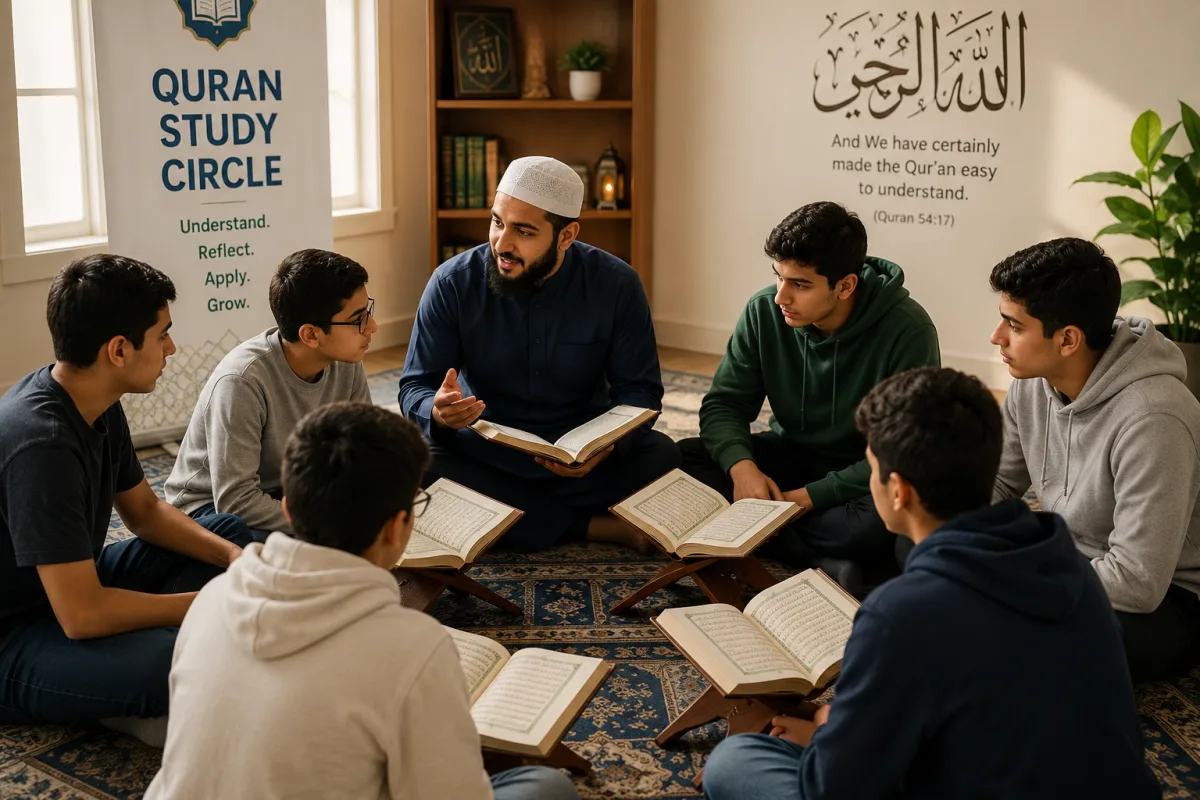
Choosing an online Qur'an academy can feel surprisingly hard. A quick search returns dozens of schools that all promise qualified teachers, flexible timings, and affordable fees. On the surface they look almost identical. Yet once you enrol, the differences become very real: some teachers are patient and well-trained, some platforms are reliable, and some academies actually track your child's progress instead of just collecting a monthly payment.
The good news is that you do not need to be an expert to make a wise choice. You just need to know which questions to ask before you commit. The right questions quickly separate a serious school from one that is hoping you will not look too closely.
The Prophet ﷺ said, "The best of you are those who learn the Qur'an and teach it" (Sahih al-Bukhari 5027). Choosing where and with whom your family learns is part of honouring that teaching. This guide walks you through the practical questions to ask any academy, what good answers sound like, and the quiet warning signs worth noticing.
Reading time: about 10 minutes.
Reviewed by the Tayseerul Quran Teaching Team Qualified Quran teachers helping children and adults learn Quran reading, Tajweed, Noorani Qaida, Hifz, and Arabic through one-on-one online classes.
What You'll Learn
- What Should I Look For in an Online Quran Academy
- How Do I Check Teacher Qualifications
- Is a Free Trial Lesson Standard
- How Much Should Online Quran Classes Cost
- One-to-One or Group Classes
- Can I Choose and Keep the Same Teacher
- Is a Female Teacher Available
- How Is Progress Tracked
- What If It Isn't Working
- How to Compare Academies Fairly
- A Qualified Teacher's Perspective
- Frequently Asked Questions
- Continue Learning
- Final Thoughts
- References
Knowing What Matters Before You Enrol
Before comparing prices or watching promotional videos, it helps to be clear about what actually makes a Qur'an academy good. Most of what matters is not visible on the homepage. It lives in the teaching quality, the structure of lessons, and how the school treats you when something goes wrong.
What Should I Look For in an Online Quran Academy
Start with the teacher, because everything else depends on it. A strong academy is built around qualified teachers who can read with correct Tajweed, explain gently, and adjust to a learner's pace. Technology and scheduling matter, but a polished platform cannot rescue a weak teacher.
Look for a clear curriculum. Whether the goal is Qur'an reading, Noorani Qaida, Tajweed, Hifz, or Arabic, the school should be able to explain the path from where the student is now to where they want to be. Vague answers like "we teach everything" often mean there is no real plan.
Pay attention to communication. A good academy answers your questions clearly, tells you who your teacher will be, and does not pressure you to pay quickly. Warm, honest, unhurried communication before you enrol is usually a sign of how they will treat you afterwards.
Finally, notice the small operational things: reliable class links, teachers who show up on time, sensible timings for your zone, and a simple way to reschedule when life happens. These details quietly shape whether lessons continue for years or fade after a few months.
How Do I Check Teacher Qualifications
This is the single most important question, and you have every right to ask it directly. A serious academy will happily tell you about a teacher's background: where they studied, whether they have Ijazah or formal certification in Tajweed or Hifz, how long they have been teaching, and whether they are experienced with your specific need, such as young children or complete adult beginners.
Ask how teachers are selected. Does the academy test recitation and teaching ability before hiring, or does anyone who applies get students? Ask whether teachers are supervised or reviewed, because ongoing oversight is a sign that the school cares about maintaining standards, not just filling slots.
Do not be shy about verifying claims. You can ask a teacher to recite a passage during the trial and explain a Tajweed rule as they would to a student. Good teachers welcome this. If an academy becomes defensive or gives only vague reassurances, treat that as useful information. For a fuller walkthrough, see our guide on how to verify a Qur'an teacher's qualifications, and the practical choosing a Qur'an teacher checklist.
Trials, Cost, and Class Format
Once you trust the teaching, the next questions are practical: how do you test a school without risk, what should you pay, and which class format fits your family?
Is a Free Trial Lesson Standard
Yes. A free trial lesson has become a normal, expected part of choosing an online Qur'an academy, and most reputable schools offer at least one. The trial exists so you can meet the teacher, watch how they interact with the student, and see whether the format suits you, all before any money changes hands.
Treat the trial as a real evaluation, not a formality. Notice whether the teacher is warm and patient, whether they assess the student's current level, and whether they explain how future lessons would be structured. For a child, watch whether they seem comfortable and engaged. For an adult beginner, notice whether the teacher makes you feel at ease rather than embarrassed.
If a school refuses any kind of trial and insists on payment first, that is worth pausing over. It is not automatically a scam, but a confident academy usually has no problem letting its teaching speak for itself.
How Much Should Online Quran Classes Cost
Prices vary widely depending on the teacher's experience, the number of weekly classes, lesson length, and where the academy operates. Rather than chasing the lowest number, think in terms of value: what you receive for what you pay.
Be cautious at both extremes. Fees that seem too good to be true often mean rushed lessons, overloaded teachers, or high turnover, which quietly costs you in slow progress. Very high fees do not guarantee quality either. The goal is a fair price for qualified, consistent, well-structured teaching.
Ask exactly what a fee includes: how many classes per week, how long each class is, one-to-one or group, and whether materials are provided. A clear, itemised answer lets you compare schools honestly. We explore this balance in depth in cheap versus quality Qur'an classes, which can help you avoid false savings.
One-to-One or Group Classes
Both formats can work, and the right choice depends on the learner. One-to-one classes give the teacher's full attention to a single student, so lessons move at exactly the right pace, mistakes are corrected immediately, and shy learners feel safe. This is usually ideal for beginners, young children, and anyone working seriously on Tajweed or Hifz.
Group classes can be more affordable and add a sense of shared motivation, which some learners enjoy. The trade-off is less individual attention, and a pace set for the group rather than for your child specifically. A struggling student can fall behind quietly, while a fast learner may feel held back.
At Tayseerul Quran we focus on one-to-one online classes precisely because Qur'an learning is so personal. Every learner's starting point, memory, and pronunciation challenges are different. If you are weighing formats, our overview of online Qur'an classes explains how one-to-one lessons are structured in practice.
Your Teacher and Your Progress
The relationship with a teacher, and the way progress is measured, often determine whether Qur'an learning becomes a lasting habit or a short experiment.
Can I Choose and Keep the Same Teacher
Consistency matters enormously in Qur'an learning. A teacher who knows your child's habits, strengths, and specific pronunciation struggles can build on previous lessons instead of starting over each week. So yes, this is a fair and important question to ask.
Ask the academy directly: can we request a particular teacher, and will the same teacher stay with the student long-term? Also ask what happens if that teacher is unavailable, whether a familiar substitute steps in or a stranger appears without warning. Good schools plan for this and keep you informed.
Frequent, unexplained teacher changes are a common frustration with weaker academies. If a school cannot promise reasonable continuity, that is worth weighing carefully, because a broken teacher-student relationship is one of the main reasons families quietly give up.
Is a Female Teacher Available
Many families prefer a female teacher, especially for girls, women, and younger children, and a well-run academy treats this as a normal, respected request rather than an inconvenience. When you enquire, simply ask whether qualified female teachers are available for your preferred timings.
A female teacher can make many learners more comfortable, and comfort directly affects how well someone learns. There is nothing awkward about stating this preference clearly at the start; a good academy will accommodate it wherever possible and tell you honestly if availability is limited for certain time slots.
If teacher gender is important to your family, raise it before enrolling rather than after. It is far easier to arrange a suitable match at the beginning than to switch teachers later.
How Is Progress Tracked
Learning the Qur'an is a gradual journey, and you deserve to see movement along it. Allah says, "And We have certainly made the Qur'an easy to remember" (Surah al-Qamar, 54:17), yet steady effort and clear structure are what turn that ease into real progress. Ask each academy how they measure and share that progress.
Good answers include lesson-by-lesson notes, clear goals such as completing Noorani Qaida or a set portion of memorisation, periodic reviews, and simple updates to parents. Some schools share short reports or messages after lessons so you always know what was covered and what comes next.
Be wary of academies that cannot describe how they track anything. Without structure, weeks blur together and it becomes hard to tell whether a student is genuinely improving or simply attending. When you compare schools, treat honest progress tracking as a sign of a serious, well-organised program, the kind described in our guide to the best online Qur'an academy.
What If It Isn't Working
Even with careful choosing, sometimes a match is not right. Perhaps the timing is difficult, the teaching style does not suit the student, or progress has stalled. This is normal, and a good academy has a calm, respectful way to handle it.
Before enrolling, ask about flexibility: can you change teachers if needed, adjust class times, pause during travel or illness, or step down the number of classes? Ask about their cancellation and refund approach so there are no unpleasant surprises. Clear, fair policies signal a school that respects families.
If problems arise, raise them early and directly. Often a small change, a different teacher, a new time, a tweaked pace, is all that is needed. A trustworthy academy listens, adjusts, and works with you rather than treating you as a locked-in subscriber.
Comparing Your Options
After gathering answers, you still have to decide. A simple, consistent method keeps the comparison fair and calm.
How to Compare Academies Fairly
Compare like with like. Line up each academy on the same points: teacher qualifications, one-to-one versus group, classes per week, lesson length, total monthly cost, teacher continuity, progress tracking, and flexibility. A short written list or table makes differences obvious that a sales pitch tends to blur.
Weight the trial lesson heavily. A single honest trial often tells you more than a dozen glowing testimonials, because you experience the teaching directly. Trust what you observe: the teacher's patience, clarity, and warmth, and how comfortable the learner feels.
Finally, listen to your instinct about communication and honesty. The academy that answers questions openly, avoids pressure, and admits its limits is often the one that will serve your family faithfully for years. Price matters, but reliability and trust matter more over the long run.
A Qualified Teacher's Perspective
Speaking from experience as Qur'an teachers, the families who thrive are rarely the ones who found the cheapest option or the flashiest website. They are the ones who asked good questions early and chose a school that answered them honestly.
The Qur'an itself sets the standard for how it should be taught. Allah instructs, "And recite the Qur'an with measured recitation" (Surah al-Muzzammil, 73:4). That measured, careful approach, correct Tajweed, unhurried pace, attention to each learner, is exactly what a good academy is built to deliver. It cannot be rushed, and it cannot be faked over the long term.
From the inside, the difference between schools usually comes down to two things: whether teachers are genuinely qualified and supervised, and whether the school treats each student as an individual rather than a number. Continuity with a caring teacher, honest progress updates, and a willingness to adjust when something is not working, these quietly separate lasting learning from a subscription that fades.
On matters of religious ruling, such as questions about recitation obligations or specific fiqh, we always encourage families to consult a qualified scholar directly. A teacher's role is to teach recitation and memorisation with care; a scholar's role is to give rulings. Knowing the difference protects you and keeps your learning on solid ground.
Frequently Asked Questions
Do reputable online Quran academies really offer free trials?
Yes. A free trial lesson is now standard practice among reputable online Qur'an academies. It lets you meet the teacher and judge the fit before paying. If a school refuses any trial and demands payment upfront, ask why before committing.
How can I verify a teacher is actually qualified?
Ask directly about their studies, certification or Ijazah, teaching experience, and whether they were tested before hiring. During a trial, you can ask them to recite and explain a Tajweed rule. Serious academies welcome these questions rather than avoiding them.
Is one-to-one better than group for children?
For most children and beginners, one-to-one is better because the teacher gives full attention, corrects mistakes immediately, and moves at the child's pace. Group classes can be cheaper and motivating for some, but individual attention is limited.
Can I request a female teacher?
Yes. Requesting a female teacher is a normal and respected preference, especially for girls, women, and younger learners. Ask about availability for your preferred timings before enrolling, and a good academy will try to arrange a suitable match.
What is a fair price for online Quran classes?
There is no single correct figure, since fees depend on teacher experience, class frequency, and lesson length. Aim for fair value rather than the lowest price. Ask exactly what each fee includes so you can compare schools honestly.
What should I do if the classes aren't working out?
Raise the issue early and directly with the academy. Often changing the teacher, time, or pace resolves it. Ask in advance about switching teachers, pausing classes, and refund or cancellation policies so you know your options.
How often should progress be reviewed?
Look for regular, structured feedback, whether short notes after lessons, periodic reviews, or clear goals such as completing Noorani Qaida. The exact frequency matters less than having an honest, consistent way to see that the student is genuinely improving.
Continue Learning
- Best Online Qur'an Academy: How to Recognise One
- Cheap vs Quality Qur'an Classes: Finding the Balance
- Choosing a Qur'an Teacher: A Practical Checklist
- How to Verify a Qur'an Teacher's Qualifications
- Online Qur'an Classes: What to Expect
Final Thoughts
Choosing an online Qur'an academy is really about asking a handful of honest questions and paying attention to the answers. Who is the teacher, and are they qualified? Is there a free trial? How is progress tracked? Can we keep the same teacher, and what happens if it is not working? The schools that answer these clearly and without pressure are almost always the ones worth trusting.
Take your time, use the free trial fully, and let what you observe guide you more than any advertisement. Qur'an learning is a long and beautiful journey, and starting with the right academy makes the whole path smoother for your family.
The best way to test everything in this guide is to experience a lesson for yourself. Meet a teacher, watch the teaching, and see how it feels, with no commitment.
Start with a free trial lesson →
References
- Sahih al-Bukhari 5027
- Surah al-Qamar (54:17)
- Surah al-Muzzammil (73:4)